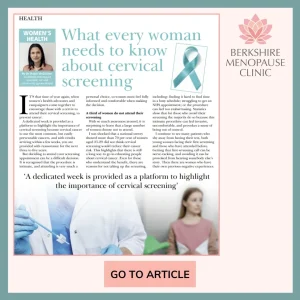
Cervical Screening (smear test) Awareness
I remember having my first ever cervical screening ‘smear tests’, in my early 20’s. As I sat nervously on the examination bed, not knowing what to expect, the doctor appeared from behind the curtain. ‘Are you ready?’, she asked enthusiastically. I gave a sceptical nod. ‘It’s going to feel a bit cold’ she announced as she leapt towards me, with what I could only describe as, a clear plastic duck beak. It turned out I wasn’t far wrong. The instrument used during the procedure is funnily enough (I laugh nervously) called a ‘Duckbill’ speculum due to its appearance and rather specific mechanism of opening and closing like the aquatic fowl! This was not what I had envisaged at the doctor’s that day. But I stayed, why? – because cervical cancer is one the most easily preventable gynaecological cancers, and I knew this was the right choice to make.
Am I glad I stayed. The procedure was quick, and the result arrived at my door within a few weeks, providing me reassurance for the next three years.
But it wasn’t an easy decision. I was scared, like so many other women. But was this down to my irrationality? maybe… but, for most of us, going through such an intimate procedure feels invasive, is often uncomfortable, and provokes a sense of being out of control.
Latest figures show that nearly a third of women do not attend screening, majority of whom fear pain.
For some, it’s the first screening call, and fear is evoked from someone else’s story, whilst for others, it’s their own previous negative experiences. These situations, amongst others, can result in conditions such as vaginismus (the involuntary tensing or contracting of the vaginal muscles) and vulvodynia (intense pain around the vulva and vagina), with the prospect of future examination seemingly impossible. These pains are REAL and should not be minimised or dismissed.
As clinicians, we need to be mindful that many women have existing vulval and vaginal conditions such as eczema, lichen sclerosis and Genito-urinary atrophy (caused by hormonal changes in pregnancy, breastfeeding, perimenopause, and menopause). All of these can result in loss of vaginal stretchiness, dryness, heightened sensitivity, and thinned skin – all of which can make the procedure intolerable. No wonder women put off having it done!
It doesn’t have to be this way – speak to your nurse or doctor about your fears, you will not be the first to have concerns. Here are some tips that may help encourage you to get this potentially lifesaving test done:
-Bring support to the appointment, a hand to ‘squeeze’.
-Bring calming music and try breathing exercises at the appointment.
-If you have vaginal pain or dryness, you may benefit from vaginal treatments such as oestrogen cream and moisturisers, which we can prescribe a few months leading up to the procedure to make it more comfortable
– Water-based lubricants should be used during the procedure as do not affect screening (smear results) and can make the procedure much more comfortable.
– Using a small speculum during the procedure, if possible, as this can make the procedure more comfortable. Looking at equipment in advance, help some women feel more in control.
-You may feel less nervous if you understand what the procedure and screening entails- Some example resources include ‘Jo’s Trust’ (www.jostrust.com) and the campaign ‘Help Us Help You – Cervical Screening Saves Lives‘ (https://campaignresources.dhsc.gov.uk/campaigns/help-us-help-you-cancer/cervical-screening).
Ultimately, we know that it can feel embarrassing or easy to ‘put off’ but accepting your invite and getting this quick check could save your life!
‘What is Cervical screening – the FACTS’
Cervical screening (once called a smear test) checks the health of a woman’s cervix (the neck of the womb, opening into the vagina). It is a simple procedure, where a soft brush is used to gently sweep cells from the cervix.
It does not directly test for cancer but checks for certain ‘high risk’ variants of Human Papilloma Virus (HPV), as these are found in over 99% of all cervical cancers. Conversely, this does not mean that everyone with HPV develops cancer. In fact, HPV itself is a common virus, with the majority of the population (men and women) getting it at some point in their life. The virus often clears itself within a few years, and most do not know they carry it, as symptoms are uncommon.
The virus can remain in the body, dormant for many years, without causing any harm. Therefore, in those who test positive for the virus, it is not possible to say when exactly the virus was picked up.
In some cases, high-risk HPV can lead to changes on the cervix, and very rarely, it can develop into cervical cancer.
Who should attend for screening?
In England, NHS cervical screening is offered to anyone with a cervix aged 25 to 64, including those in same-sex relationships, transgender, and non-binary people with female reproductive organs. Recall is every 3-5 years depending on your age.
The HPV screening is a routine test, and not to investigate those with symptoms. Majority of virus carriers have no symptoms; therefore, it is important to attend regular screening when invited.
If you get bleeding after sex or between your periods, outside of your screening invite, then you should speak with your doctor immediately as this can be a sign of inflammation and changes to the cervix (or other female genital areas) that needs separate investigating.
What happens after the test?
The sample is sent for testing to the lab.
If the sample is negative for ‘high risk HPV’, there is no need for further investigations, and you will be invited for routine screening. If the sample is positive for ‘high risk HPV’, the same sample will be further tested for cell changes, and based on this you will either be offered more regular screening or referred for further investigation to look at the cervix in more detail.
Even if you carry a high-risk HPV type, the chance of getting cervical cancer is still low, because the aim of screening is to pick up changes early so that they can be easily treated and do not turn into cervical cancer.
Can you reduce your risk of getting HPV
There are many variants of HPV. As well as cervical cancer, some are also known to lead to other rare cancers such as vaginal, penile, head, and neck; and more commonly genital warts. There are ways to help reduce transmission. For example, using barrier contraception (such as condoms) as HPV is usually acquired through skin-to-skin contact. Having a weakened immune system can make it harder to clear the virus. Lifestyle modification such as not smoking can help prevent this.
A routine vaccination programme has also been introduced since 2008. The aim is to prevent getting the virus in the first place. The vaccine cannot help eradicating the virus if you have already it, therefore the programme is aimed at younger school children and those under the age of 25, where it is rare to have acquired the virus already. The vaccine programme is aimed at preventing both sexes from acquiring HPV which causes cancers and warts.
To book your cervical screening test or for any other support with your women’s health concerns, book an appointment with our specialist, who is here to support you