What is a migraine
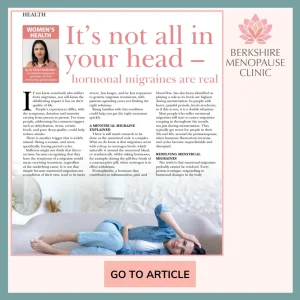
It is a term used to describe an intense headache that stops the ability to function normally. It can last a few hours to a few days. Typically, it occurs on one side and is accompanied with a collection of symptoms such as nausea, vomiting, dizziness, sensitivity to light or sound, throbbing in the back of the eye.
Sometimes migraines occur with ‘auras’ – These are ‘warning signs’ that may occur before an attack. For example, visual disturbance (some people describe coloured spots or zig-zag lines) or tingling arms or legs.
Are my migraines hormone migraines?
You may be getting hormonal headaches or perimenopausal and menopausal migraines
In women, migraines with aura can be associated with higher levels of oestrogen such as in those taking oestrogen contraceptive pills, hormonal replacement therapy, and pregnancy.
Conversely, migraines without aura tend to occur when oestrogen levels dip. This can be days leading up to your period, the pill-free days if you are taking the contraceptive pill, or around perimenopause and menopause. During perimenopause, oestrogen levels fluctuate and become more erratic. This imbalance in hormones tends to worsen migraines.
Additionally, some perimenopausal symptoms such as hot flushes, night sweats, mood swings, poor sleep can trigger migraines. As you go through the menopause, the fluctuating hormones start to settle, and these types of migraines tend to improve.
Why do migraines continue even after menopause?
It can take years for hormone fluctuations to completely settle. How long you experience menopause symptoms vary between women. In those prone to migraines, even once hormones settle, non-hormonal migraines may continue after menopause. The cause of these can be tricky to identify. They may be triggered by certain lifestyle choices and medical conditions, and you may find it helpful to keep a diary to identify any patterns.
What are the hormonal headache/ hormonal migraine treatments?
Lifestyle modification.
Eating regular meals, keeping hydrated and avoiding caffeine, nicotine, and alcohol, can all help. You may identify specific foods and drinks that trigger migraines. Reducing stress through relaxation techniques and mindfulness and a good sleep routine are all important. Regular exercise and weight loss has also been shown to be effective.
Non hormonal medications
Some people benefit from simple pain relief such as paracetamol or ibuprofen to relieve symptoms at the time of an attack. There are also treatments specifically aimed for treating acute migraine attacks, these include ‘triptans’. Specifically, Frovatriptan is shown to be effective for menstrual/ hormonal migraines. Some people find improvement in their symptoms using a class of antidepressants called Selective Serotonin Reuptake Inhibitors (SSRIs). For more information about these medications, we advise you discuss this with your GP or specialist.
Hormone Replacement Therapy (HRT)
If your migraines are due to low oestrogen, then by replacing oestrogen this can improve symptoms. Also, as migraines can be triggered by other perimenopausal symptoms such as hot flushes and night sweats, by treating these, can indirectly reduce the likelihood of migraine. If aura worsens or starts for the first time with HRT, it can mean that the dose of oestrogen is more than sufficient to control your symptoms, and it may need reducing. However, it can also take 3 months for symptoms to settle after starting treatment, so it is important your dose doesn’t keep getting adjusted as this can itself cause hormone fluctuation and in turn worsening migraines.
What types of HRT are suitable with migraines?
There are different ways to take oestrogen- either as an oral tablet or absorbed through the skin (transdermal) as patches, gels, sprays. Most oral oestrogen preparations are synthetic and pass through the liver (where clotting factors are made), which result in a small increased risk of blood clots and strokes. As migraines (particularly those with aura) are associated with an increased risk of stroke, oral HRT should be avoided. Furthermore, some oral preparations cause fluctuations in hormones and trigger migraines. The increased risk of stroke is not present with transdermal preparations. Of the transdermal preparations available (patches, sprays, and gels), many patients report patches help their migraines as they release a steady rate of hormone over 24 hours, thus stabilising the fluctuations.
If you have a womb (uterus), you will need to take a progestogen, in addition to oestrogen. This is because oestrogen helps manage your symptoms, and progestogens helps protect your womb lining. If you take oestrogen alone, this can cause the womb lining to thicken, and in turn increase your risk of womb cancer.
There are various ways to take progestogen HRT -either in oral tablets, combined with oestrogen in a patch, or having a Mirena® coil inserted in the womb.
Micronised (body identical) progesterone is the most widely used. It has less risks than synthetic progestogens, including no added risk of blood clots and stroke, making it suitable for those with migraines. Hormonal migraines may be related to progestogen side effects or intolerance. As a result, some migraines are triggered by taking progestogens. Micronised progesterone has fewest side effects and is a good option in these women. This preparation is most commonly taken as an oral tablet. The same tablet can be taken vaginally, off licence. This route is useful in those with severe progesterone side effects as the medication acts locally on the womb, reducing systemic side effects further.
Like oestrogen preparations, some progestogens cause hormone fluctuation, which we know can trigger migraines. Choosing a Mirena coil is a good option as it provides progestogen at a continuous slow rate, thus keeping hormones levels steady. The Mirena coil has further added benefits- as well as providing womb protection with HRT, it provides long-term contraception, and treatment of heavy menstrual bleeding.
Migraines and Vaginal oestrogen
Local oestrogen is used to help control vaginal and vulval menopause symptoms. Some women have reported an increase in their migraines when they first start treatment. This is because there can be an initial surge in oestrogen circulating through the body, even with vaginal preparations. However, this side effect should quickly settle and does not trigger migraines in the long-term.
For more support with your menopause symptoms. book an appointment with our specialist who is a community gynaecologist, British Menopause Society Accredited Specialist, and Women’s Health GP. We offer virtual and in person appointments.
https://berkshiremenopauseclinic.com/contact/