What is HRT?
During perimenopause and menopause, there is a decline in the hormones: oestrogen, progestogens, and testosterone. Hormone Replacement Therapy (HRT) refers to treatments used to replace these.
Oestrogen HRT
Low levels of oestrogen lead to symptoms such as hot flushes, night sweats, skin & hair changes, joint pains, brain fog, vaginal & bladder symptoms, to name a few. Oestrogen HRT is the most effective way to treat menopausal symptoms. Furthermore, it has a breadth of health benefits such as reducing risk of developing heart disease, osteoporosis, diabetes, and cognitive decline.
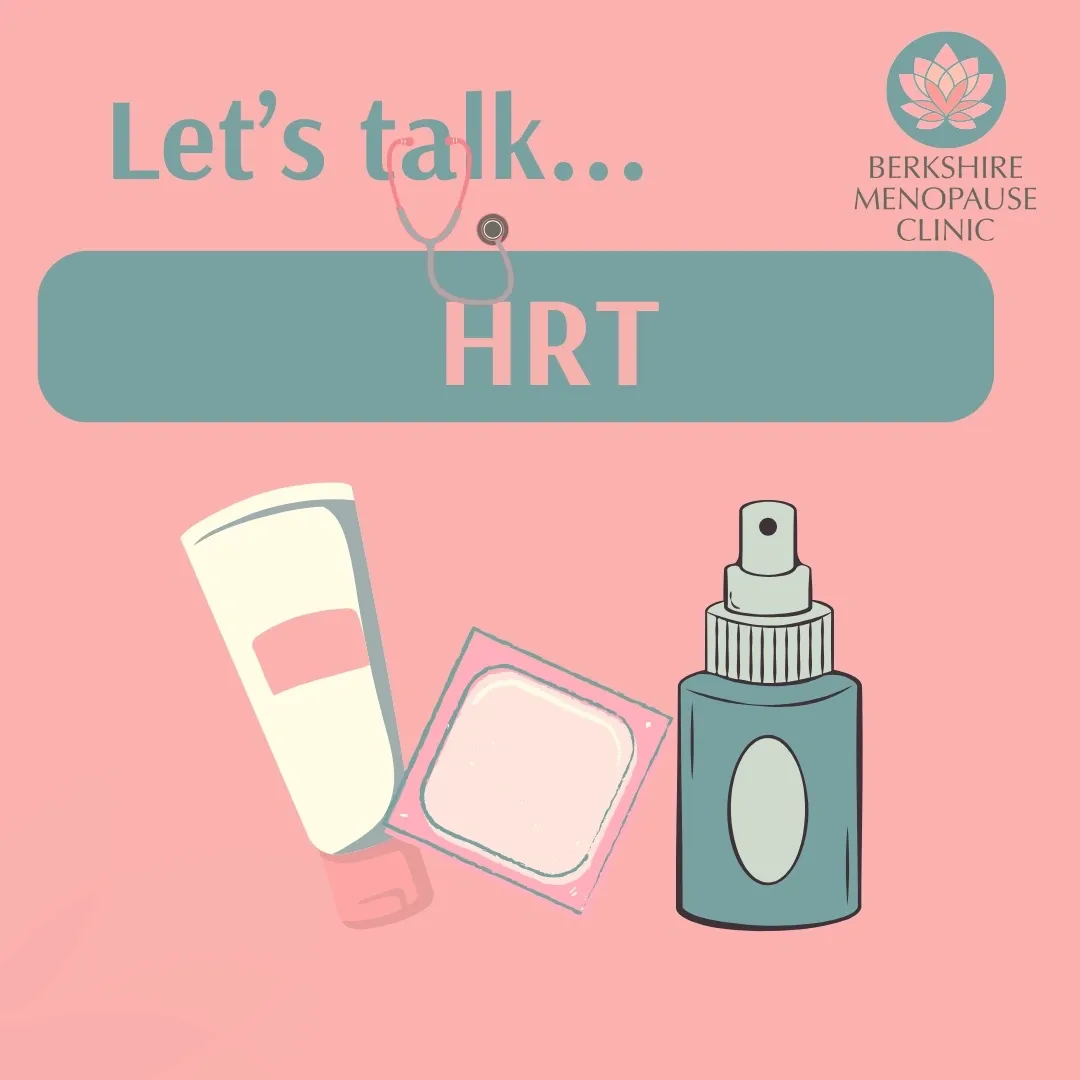
There are different ways to take oestrogen- either as an oral tablet or absorbed through the skin (transdermal) as patches, gels, sprays. Some specialists offer an oestrogen implant, which is a small rod inserted under the skin. However, these are unlicenced and reserved in those who do not improve with other treatments.
Oestrogen gels, patches, and sprays are most widely used due to the benefits that come from being transdermal (absorbed through the skin) and being body identical (mimic natural oestrogen). This make them favourable over oestrogen tablets, which are both oral and synthetic. Transdermal oestrogens have less side effects over synthetic oestrogens, including headache, breast tenderness, bloating and mood swings. Oral oestrogens have more risks as they pass through the liver (where clotting factors are made), which result in a small increased risk of blood clots and strokes. This risk is not present with transdermal preparations and is also the reason transdermal oestrogen is safe in women with migraines (unlike oral oestrogens).
There are some preparations available which combine oestrogen and progestogens together (as a patch or tablet). Recently, a new combined oral tablet has been developed (Bijuve) which contains both body identical oestrogen and progestogen. This is better for side effects and less risk of breast cancer. However, it still carries the risk of blood clots and stroke associated with ORAL oestrogen.
Progestogen HRT
If you have a womb (uterus), you will need to take a progestogen, in addition to oestrogen. This is because oestrogen helps manage your symptoms, and progestogens helps protect your womb lining. If you take oestrogen alone, this can cause the womb lining to thicken, and in turn increase your risk of womb cancer. By taking a progestogen, this will reduce this risk.
There are various ways to take progestogen HRT -either in tablet form (synthetic or body-identical) or inserting a Mirena® coil. There are also some preparations available which combine oestrogen and synthetic progestogens together (as a patch or tablet).
The type of risk and side-effects you develop, depends on the type of progestogen you take:
Micronised (body identical) progesterone is the most widely used as it has fewer side effects than synthetic progestogens. Such side effects include mood swings, bloating, and breast tenderness. There is also less risks of blood clots and no risk of breast cancer for the first 5 years. After this, the risk is still small. You are, however, more likely to get irregular spotting or bleeding.
Even though synthetic progestogens carry higher risks of breast cancer, the risk is still small compared to those who drink more than 2 glasses of wine /day; who are obese; do not exercise.
The Mirena coil (a small plastic T-shaped device that sits in the womb) is not only a good option for those needing womb protection with HRT, but it is the only progestogen HRT that is licenced for use as a long-term contraception, and treatment of heavy menstrual bleeding.
Testosterone Replacement
Commonly thought of as the ‘male’ hormone, testosterone is also produced by the ovaries (and adrenal glands) in women. Like oestrogen and progesterone, testosterone levels fall around the menopause. Low levels of testosterone can lead to symptoms including low sex drive; mood; energy, joint & muscle pains, and poor memory & sleep.
Tibolone
A synthetic steroid, which mimics the activity of oestrogen, progesterone, and androgens. Although there is proven improvement in menopausal symptoms and bone protection, tibolone may carry risks of breast cancer (although there are some reports this may be less than HRT); blood clots, and stroke (in those over 60). Many women complain of irregular spotting or bleeding.
Local vaginal oestrogens
These are oestrogen treatments that are applied (and absorbed) directly to the vulva and vagina.
They come in a variety of preparations such as creams, gels, & pessaries, which all work in slightly different ways. Ultimately which ones you choose is down to personal preference. Unlike systemic HRT, there is no need for progestogens to protect the womb lining when using vaginal oestrogens (even if using long term).
Bio identical treatments
These are different to body-identical hormones which mimic the body’s natural hormones. Unlike body-identical treatments, there are very studies that can confirm the safety of bio-identical treatments, and they tend not to be regulated by medicine authorities, nor are they subjected to thorough quality control. For these reasons, they are not recommended by NICE.
Does HRT delay menopause
Some women are concerned taking HRT just ‘pauses’ menopause, and the symptoms will return once HRT is stopped. HRT does not ‘delay’ your menopause. If you have symptoms after stopping HRT, this means you would have been having symptoms if you had never taken HRT. This is because levels of oestrogen decline during the perimenopause and menopause, and they remain permanently low if you do not replenish levels.
What are the different types of HRT?
Oestrogen-only HRT
If you no longer have a womb (you have had a hysterectomy), you will only need oestrogen for HRT. This is because progestogens in HRT are only used to protect the womb lining from womb cancer, whilst oestrogen helps manage your symptoms.
There are a few exceptions- In those who have had a hysterectomy for endometriosis; in those hysterectomy patients where the cervix (neck of the womb) has not all been removed; or those who have had an endometrial ablation (a procedure to remove the womb lining), progestogens are still needed as some womb lining may remain.
Combined HRT
If you have a womb, you will need both oestrogen and progestogens (Combined HRT).
There are 2 ways of taking combined HRT:
Continuous Combined HRT. If you are not having periods (and your last period was more than one year ago), it is recommended that you take progestogens every day, to protect your womb lining from the risk of womb cancer.
An alternative method to taking daily progestogens, is to have a Mirena coil fitted in the womb, which continuously releases progestogens for 5 years.
Sequential Combined HRT. If you are still having periods (or you last period was less than one year ago), it is recommended you take progestogens (usually) for half of the month. It is likely you will get a withdrawal bleed like a period with this regime. There is no harm in those still having periods to be on continuous HRT, but you are more likely to get erratic or irregular bleeding throughout the month.
Once a woman has been on sequential HRT for more than 4 years or reaches the age of 55 (whichever occurs first), it is recommended to switch to continuous combined HRT as this is proven to be safer for protecting the womb lining from cancer.
What are the added benefits of HRT?
Cardiovascular (heart and vessel) disease. Evidence from multiple studies have shown HRT started before the age of 60 or started within 10 years of the menopause (known as the ‘window of opportunity’), is associated with reduced cardiovascular disease. In those starting after this time, these benefits aren’t present, but there is no evidence for harm.
Osteoporosis (Bone disease)
Oestrogen HRT remains the first choice for long term osteoporosis prevention and treatment below the age of 60. This protective effect does decline after stopping treatment, but many studies have shown that even taking low dose HRT and for a few years around menopause can provide long-term protection.
Cognition and Dementia (Memory)
There is some evidence to suggest starting HRT in early menopause, may help improve cognition (brain fog, forgetfulness). HRT should not be started for the sole purpose of prevention or slowing down progression of (already diagnosed) dementia as the evidence is variable, but what is evident is HRT does not cause dementia.
Bowel cancer
Studies to date suggest a reduced risk of colorectal cancer with combined HRT
HRT in Premature (Premature Ovarian Insufficiency) or early menopause
HRT is strongly recommended in those who have an early or premature menopause, to control symptoms. Even in those with no symptoms, HRT is still advised as it can significantly decrease the long-term risks of heart disease, osteoporosis, and dementia. There is also no added risk of breast cancer with HRT under the age of 50. For these reasons, HRT is preferred over the combined contraceptive pill (another option in young women) which does not have these benefits.
HRT in early menopause is recommended until at least the natural age of menopause (approximately age 51), as it is simply replacing the hormones that the body would have naturally been producing anyway.
What are the risks of HRT?
Stroke and blood clots
A woman’s baseline risk of stroke is based on factors such as age (increasing above the age of 60); lifestyle (such as obesity, smoking), and any clotting diseases. The risk of stroke with HRT is low and generally dependant on higher doses and certain preparations (such as oral oestrogens, and synthetic progestogens). There is unlikely to be any added risk with transdermal preparations (through the skin) and these should be recommended in those with high risk of blood clots, stroke, or migraines.
HRT and breast cancer
Every woman has a different background risk of breast cancer. Both genetics (if breast cancer runs in the family), and lifestyle factors (such as lack of exercise, obesity, drinking excess alcohol, smoking) can give you a greater risk of breast cancer than taking HRT.
In those taking HRT, there is only a small risk of being diagnosed with breast cancer and this is dependent on the type of HRT (synthetic progestogens); starting over the age of 50; and taking it for more than 5 years.
It is worth knowing that oestrogen-only HRT, carries little or no increased risk and so is very safe in those with no womb (who have had a hysterectomy).
Women who have had breast cancer
HRT is not routinely recommended for women with previous breast cancer as the evidence is not clear whether you are likely to develop a new or recurrence of your previous cancer. There are lots of alternatives that may help symptoms.
However, local vaginal oestrogens may be suitable in those with genital and urinary tract symptoms as there are existing studies confirming they do not significantly increase systemic levels of oestrogen and may be safe.
If symptoms are significantly impacting on quality of life, women should be able to talk through the evidence and risks with their specialist so that they can make an informed choice.
Can HRT be used for contraception?
HRT itself is not a form of contraception and women who are sexually active should discuss with their specialist or GP whether they still need contraception and what options are available. One exception is the Mirena coil. This is the only progestogen HRT that is licenced for additional use as a long-term contraception, and treatment in those with heavy menstrual bleeding.
Can I HRT be started at any age?
HRT is most effective and has the most health benefits when started within 10 years of menopause. It is not unusual for women to start HRT after the age of 60, but you should start with the lowest dose and preferably using transdermal preparations.
How long can HRT be continued for?
There is no maximum time limit for a woman to continue HRT. It is common to be initially reviewed at 3 months after starting HRT. This allows time to review symptoms improvement and adjust treatment if needed. Once symptoms are controlled, we advise you have annual review to monitor any changes to your own health, and any changes to evidence-based recommendations.
For more support with your symptoms and treatment options, book an appointment with our specialist, Dr Shilpa McQuillan, who is a community gynaecologist, women’s health GP and British Menopause Society (BMS) accredited menopause specialist: