What are hormonal coils (IUS)?
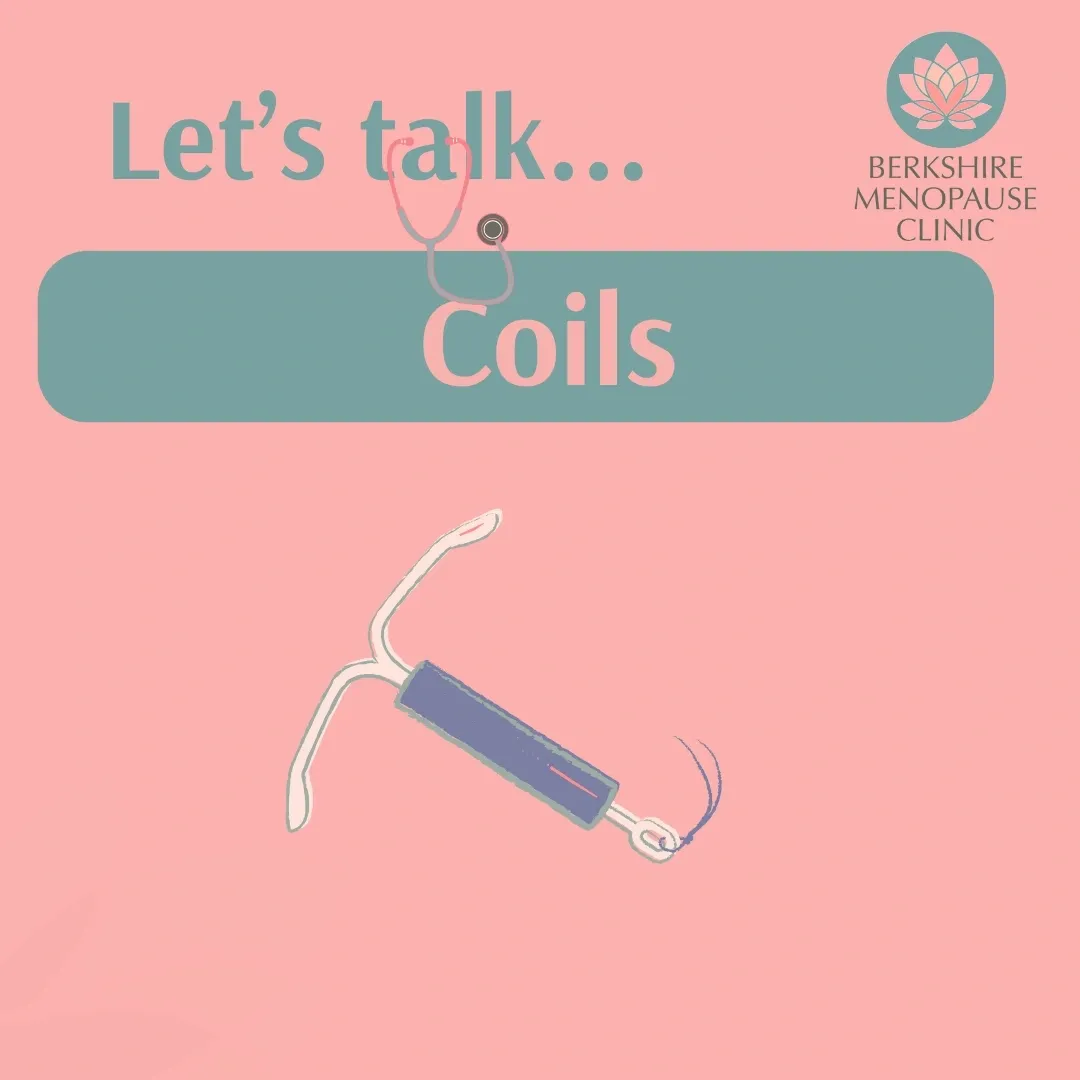
The ‘hormonal’ coil is a small plastic T-shaped device containing the progestogen, levonorgestrel. Example brands include Mirena coil, Levosert, Benilexa, Jaydess and Kyleena.
It is fitted into the womb and releases hormones slowly. It has two fine threads that hang down and rest at the top of the vagina, allowing the coil to be removed when necessary. There are various bands and doses. The types recommended will depend on the indication for use.
What is the hormonal coil used for and what are the benefits?
Part of HRT. If you have a womb (uterus), you will need to take a progestogen in addition to oestrogen. This is because oestrogen helps manage your symptoms, and progestogens helps protect your womb lining (endometrial protection). If you take oestrogen alone, this can cause the womb lining to thicken, and in turn increase your risk of womb cancer. By taking a progestogen, this will keep the womb lining thin.
Contraception. Widely used as one of the most reliable long-term reversible contraceptives, the hormonal coil can be left in place for up to eight years (10 years if over the age of 45). This removes the hassle of remembering to take a pill every day.
Many women are unaware that they may still need contraception when taking HRT. The Levonorgestrel coil is the only HRT progestogen that can double up as contraception, giving it that extra advantage when choosing from different progestogen preparations.
Treatment for heavy and painful periods. The hormonal coil is known to significantly reduce period bleeding (with many women having no periods after one year) and is a safe alternative to surgery for treating conditions such as endometriosis. There are many coil brands. Some contain no hormones, and some have very low hormone levels. Whilst some of these work well for contraception, they cannot all be used to protect the womb lining (as part of HRT), or to treat period problems, which are benefits seen with high dose Levonorgestrel coils.
Progestogen side-effects. As the levonorgestrel coil releases hormones steadily and acts locally in the womb, women often experience less side effects than for example some oral progestogen tablets. These tablets may also interact with other medications, making the coil a safer option.
What are the side effects?
Side effects are more common within the first few months and generally settle after continued use.
Hormonal changes may include breast tenderness, headaches, and acne. Occasionally, some women are intolerant to progestogen,and can experience PMS-like symptoms.
Changes to bleeding patterns. This usually settles by 3-6 months. We encourage you to speak to your specialist or GP if you find this difficult or unmanageable.
Functional or simple ovarian cysts(small fluid filled sacs on the ovaries), are more common with the hormonal coil and are harmless. They usually cause no symptoms and go away on their own.
What are the risks?
Difficulty with insertion. Occasionally, it may not be possible to insert the coil due to a narrow cervix (more common in those who have had surgery to the cervix or have not had children vaginally). There are ways to overcome this, but it may occasionally not be possible, and your doctor will need to discuss alternative treatments with you.
Perforation. Very rarely, the coil might make a small hole in the wall of your womb (a perforation). One sign of this can be severe pain, but most often there are no symptoms, and the womb heals by itself.
Expulsion. Rarely, the coil may be displaced or come out. You will be advised how to check your threads. If you are unable to feel the threads, contact your GP surgery and use extra precaution such as condoms (if you are using the coil for contraception).
Infection. There’s a small chance of infection in the womb a few weeks after coil fitting. If you develop a fever, offensive discharge, or a lot of pain (more than crampy period like pains) then you should contact a doctor.
Ectopic pregnancy. The coil is an effective contraception, and it is unlikely you’ll get pregnant. If you do, there’s a small increased risk of it developing outside the womb.
Am I suitable for the hormonal coil?
There are some women for whom the hormonal coil is not suitable. Please inform us if you have any of the following:
• Allergy to progestogens/levonorgestrel
• Suspected pregnancy
• Unexplained vaginal bleeding
• Pelvic Inflammatory Disease or sexually transmitted infections (current or within the last three months)
• Large fibroids or a distorted womb shape (you may have been advised this if you have previously had a pelvic scan)
• Womb ablation or resection- procedure should be done in a hospital setting
How can I prepare for my procedure?
Pain relief- You may feel ‘period like’ discomfort during, and after the fitting. We would advise that you take some pain relief about an hour before you have the coil fitted.
Contraception- It is important you are not pregnant at the time of coil fitting. You will need to use adequate contraception or avoid sexual intercourse between your last period and having the coil fitted. If any doubt, we advise you do a pregnancy test.
What happens at the procedure?
Your appointment will last ~20–30 minutes. The doctor or nurse will usually check your understanding and gain your consent.
They will examine you to check the position of your womb before using a speculum (like that used during a smear test) to view your cervix (neck of the womb). You may be offered swabs at your procedure if it is felt appropriate. The coil is passed through the cervix and released into the cavity. Two thin threads are left hanging into the vagina. These will be cut short to avoid discomfort to you (or your partner) during sex.
Do I need to do anything after the procedure?
After your coil insertion, you can return to normal activities. You may have period-like pains, and we advise you take regular pain relief. You may also experience bleeding, which is normal. We suggest you avoid tampons for the next four weeks.
If you are using the coil for contraception, you will need to use additional contraception for up to 7 days after coil fitting.
Do I need Followup?
Most women do not need a follow up appointment. You will be advised how to check your threads yourself. Occasionally, you may not be able to feel your threads (or conversely, they hang slightly too low causing irritation to you (or your partner during sexual intercourse). We advise you book an appointment at your GP surgery to have your coil threads checked (and trimmed if needed).
Very rarely, you may develop an infection in your womb after the procedure. If you get a fever, abnormal or offensive discharge, or a lot of pain (more than crampy period like pains) then you should contact your usual NHS urgent care provider.
For more support with your menopause symptoms, book an appointment with our accredited menopause specialist