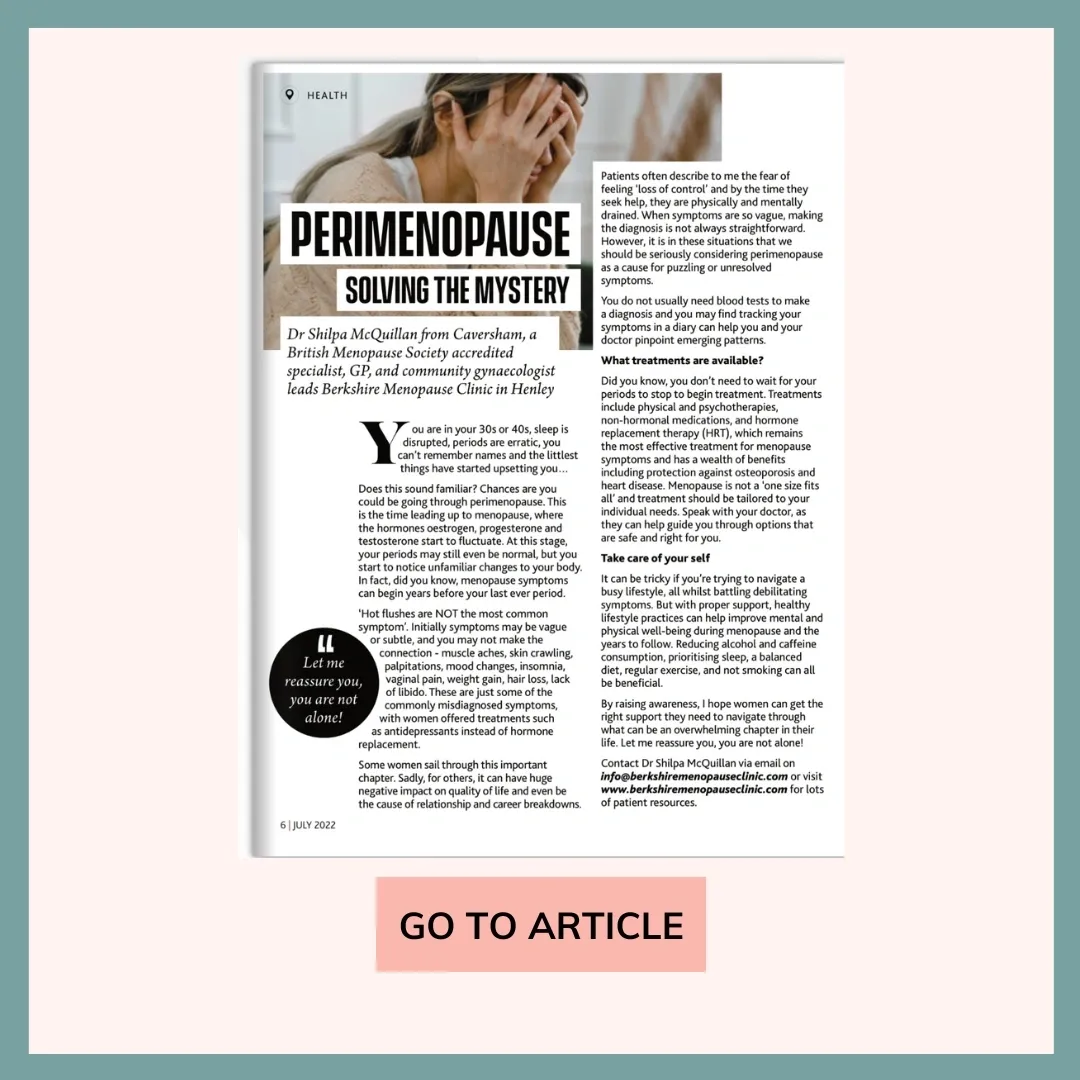
You are in your 30s or 40s, sleep is disrupted, periods are erratic, you can’t remember names and the littlest things have started upsetting you. …. Does this sound familiar?
Chances are you could be going through perimenopause! This is the time leading up to the menopause, where hormones oestrogen, progesterone, and testosterone start to fluctuate. You may start to notice changes to your periods AND the start of some symptoms. In fact, symptoms may begin years before menopause (a retrospective diagnosis, 12 months after your final period).
‘Hot flushes are NOT the most common symptom’
Initially symptoms may be non-specific or subtle, and you may not realise the connection- ‘joint and muscle pains’, ‘mood changes’, ‘insomnia’, ‘vaginal irritation’, ‘weight gain’, ‘hair loss’, lack of libido. These are just some of the commonly misdiagnosed symptoms, with women being offered treatments such as antidepressants instead of hormone replacement.
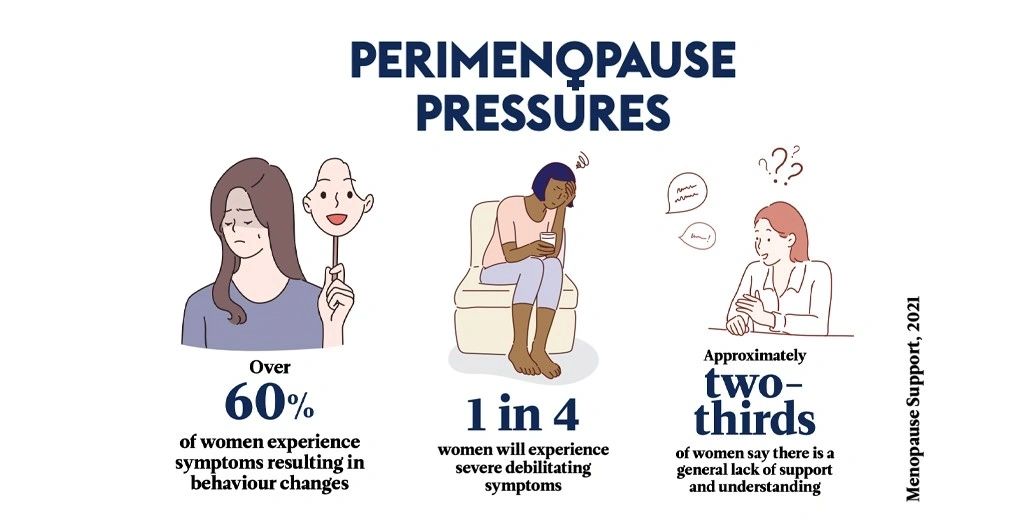
Some women sail through this important chapter whilst for others it significantly affects quality of life and sadly, the cause of many relationship and career breakdowns.
Patients often tell me how scared they are as they don’t understand what is happening to their bodies.
It can be a time of real vulnerability, with many women physically and mentally drained by the time they seek help. Making the right diagnosis is not always black and white but with increasing menopause education we should be considering perimenopause seriously as a possible cause for symptoms.
How do I know?
Symptoms alone are usually diagnostic and blood tests are often inaccurate due to fluctuating hormones. You might find it helpful to track your symptoms in a diary as this may identify emerging patterns.
What treatments are available?
Did you know, you don’t need to wait for your periods to stop to begin treatment!.
Treatments include physical and psychotherapies, non-hormonal medications, and Hormone replacement therapy (HRT), which remains the most effective treatment for menopause symptoms and has a wealth of benefits including protection against osteoporosis and heart disease. Menopause is not a ‘one size fits all’, with some women seeking alternative treatments to HRT. Your doctor can help guide you through options that are safe and right for you.
Take care of your self
It can be tricky if you’re trying to navigate a busy lifestyle, all whilst battling debilitating symptoms. But with proper support, healthy lifestyle practices can help improve mental and physical well-being during menopause and the years to follow- Reducing alcohol and caffeine consumption, prioritising sleep, a balanced diet, regular exercise, and not smoking can all be beneficial.
Take home message
By raising awareness about perimenopause we can support those navigating through this important chapter. Let me reassure you, you are not alone!