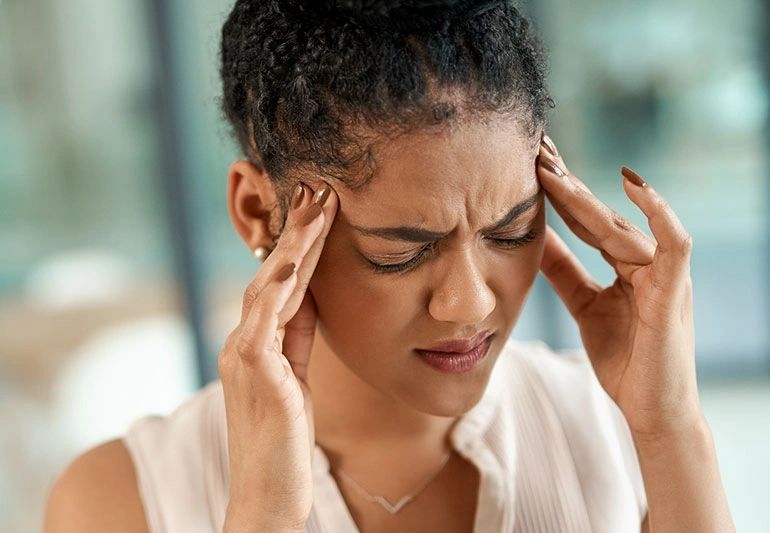
Have you always suffered from migraines and noticed they have worsened over the years. OR have you started to get headaches more recently in your 30s or 40s?
This could be hormonal migraines. Migraines and headaches tend to worsen around perimenopause, with attacks occurring more frequently and lasting longer.
Why does this happen? During perimenopause, the hormone oestrogen fluctuates. It is this ‘imbalance’ that leads to worsening symptoms like migraines. As periods become infrequent around menopause, there is less hormonal fluctuation and these types of migraines may improve. Unfortunately, in those prone to hormonal migraines, non hormonal triggers can also cause migraines and persist years after menopause. It may be helpful to keep a symptoms diary, as many women notice a pattern with hormonal migraines and their periods and the treatments may be different.
What are the treatments?
Lifestyle modification.
Eating regular meals, keeping hydrated and avoiding caffeine, nicotine, and alcohol, can all help. You may identify specific foods and drinks that trigger migraines. Reducing stress through relaxation techniques and mindfulness and a good sleep routine are all important. Regular exercise and weight loss has also been shown to be effective.
Non hormonal medications
Some people benefit from simple pain relief such as paracetamol or ibuprofen to relieve symptoms at the time of an attack. There are also treatments specifically aimed for treating acute migraine attacks, these include ‘triptans’. You may also find improvement using a class of antidepressants called Selective Serotonin Reuptake Inhibitors (SSRIs). For more information about these medications, we advise you discuss this with your GP or specialist.
Hormone Replacement Therapy (HRT)
If your migraines are due to low oestrogen, then by replacing oestrogen this can improve symptoms. Also, as migraines can be triggered by other perimenopausal symptoms such as hot flushes and night sweats, by treating these, can indirectly reduce the likelihood of migraine.
What types of HRT are suitable with migraines?
There are different ways to take oestrogen- either as an oral tablet or absorbed through the skin (transdermal) as patches, gels, sprays. Most oral oestrogen preparations are synthetic and pass through the liver (where clotting factors are made), which result in a small increased risk of blood clots and strokes. As migraines (particularly those with aura) are associated with an increased risk of stroke, oral HRT should be avoided. Furthermore, some oral preparations cause fluctuations in hormones and trigger migraines. The increased risk of stroke is not present with transdermal preparations.
It is important to know, if you have a womb (uterus), you will need to take a progestogen, in addition to oestrogen. This is because oestrogen helps manage your symptoms, and progestogens helps protect your womb lining. If you take oestrogen alone, this can cause the womb lining to thicken, and in turn increase your risk of womb cancer.
There are various ways to take progestogen HRT -either in oral tablets, combined with oestrogen in a patch, or having a Mirena® coil inserted in the womb.
For more information and our latest patient information leaflet on migraines, visit our resources page on our website www.berkshiremenopauseclinic.com