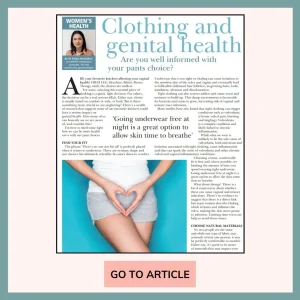
High leg, Brazilian, Bikini, Shorts, Thongs, Midi, the choices are endless. For some, selecting this essential piece of clothing is a quick, light decision. For others, the decision can be a real serious affair. Either way, choice is usually based on comfort or style, or both.
But is there something more crucial we are neglecting? – There’s a wealth of research that suggest some of our favourite knickers could have serious impact on vaginal health . How many of us can honestly say we are aware of, and consider this?
I’m here to shed some light how we can be more health savvy with our pant choices.
FIND YOUR FIT
The phrase ‘There’s no one size fits all’ is perfectly placed when it comes to underwear. There are so many shape and size choices but ultimately a healthy fit comes down to comfort. Underwear that is too tight or chafing can cause irritation to the sensitive skin of the vulva and vagina, and eventually lead to folliculitis (inflamed hair follicles), in-growing hairs, boils, numbness, abrasions, and discolouration. Tight clothing can also restrict airflow and cause sweat and moisture to build up. This damp environment is favourable for bacteria and yeasts to grow, increasing risk of vaginal and urinary tract infections.
The phrase ‘There’s no one size fits all’ is perfectly placed when it comes to underwear. There are so many shape and size choices but ultimately a healthy fit comes down to comfort. Underwear that is too tight or chafing can cause irritation to the sensitive skin of the vulva and vagina, and eventually lead to folliculitis (inflamed hair follicles), in-growing hairs, boils, numbness, abrasions, and discolouration. Tight clothing can also restrict airflow and cause sweat and moisture to build up. This damp environment is favourable for bacteria and yeasts to grow, increasing risk of vaginal and urinary tract infections.
Many studies have also found that tight clothing can trigger conditions such as vulvodynia (chronic vulval pain, burning and tingling). Vulvodynia is a complex condition and likely linked to chronic inflammation. Whilst what we wear is unlikely to be the sole cause of vulvodynia, both infections and irritation associated with tight clothing, cause inflammation and thus can spark the onset of vulvodynia and other chronic vulval and vaginal inflammatory conditions.
Choosing a loose, comfortable fit is best, and where possible, try limiting the amount of time you spend wearing tight underwear. Going ‘underwear free’ at night is a great option to allow the skin some time to breathe.
What about thongs? There is a lot of controversy about whether these can cause vaginal and urinary infections. There’s no evidence to suggest that there is a direct link, but many women describe chafing which irritates and inflames the vulva, making the skin more prone to infection. Limiting time worn can help to avoid these issues.
CHOOSE NATURAL MATERIALS
No two people are the same and whilst one type of fabric may seriously irritate one person, it may be perfectly comfortable to another. Either way, it’s good to be aware of materials that may impact your genitals. Synthetic materials such as nylon and spandex can play havoc with our carefully balanced vaginal ecosystem. The vulva and vagina have a healthy environment made up of lots of ‘good’ bacteria. These bacteria help maintain a balanced acidic PH which hoard away ‘harmful’ bacteria and infections. Synthetic materials trap moisture and change the vaginal PH, creating a good breeding environment for bad bacteria. And it doesn’t stop there, who would have thought when buying our favourite underwear, we need check for artificial dyes and colouring!
No two people are the same and whilst one type of fabric may seriously irritate one person, it may be perfectly comfortable to another. Either way, it’s good to be aware of materials that may impact your genitals. Synthetic materials such as nylon and spandex can play havoc with our carefully balanced vaginal ecosystem. The vulva and vagina have a healthy environment made up of lots of ‘good’ bacteria. These bacteria help maintain a balanced acidic PH which hoard away ‘harmful’ bacteria and infections. Synthetic materials trap moisture and change the vaginal PH, creating a good breeding environment for bad bacteria. And it doesn’t stop there, who would have thought when buying our favourite underwear, we need check for artificial dyes and colouring!
Opt for cotton or bamboo underwear, as natural fibres allow our skin to breathe and absorb moisture from sweat or discharge better than other fabrics. They are also naturally hypoallergenic, meaning they are created with minimal dyes or chemicals that could cause irritation. Think similar material when choosing period and continence pants and pads.
STAY FRESH
Changing underwear at least daily is highly advisable. Horrifyingly, there are studies done that show most underwear contains a small amount of faecal matter-so you may wish to rethink wearing those pants twice to save on a washing load! Washing underwear regularly helps prevent the buildup of bacteria, and when choosing a detergent, non-scented and hypoallergenic detergent may be best to prevent irritation.
Changing underwear at least daily is highly advisable. Horrifyingly, there are studies done that show most underwear contains a small amount of faecal matter-so you may wish to rethink wearing those pants twice to save on a washing load! Washing underwear regularly helps prevent the buildup of bacteria, and when choosing a detergent, non-scented and hypoallergenic detergent may be best to prevent irritation.
You may wear pantie liners if you are bothered about vaginal discharge and sweat build-up. This may not be the best option as pantie liner material can often cause irritation and chafing. Instead, consider cotton lined underwear, and changing underwear more than once a day to improve comfort.
CONSIDER OTHER LIFESTYLE TRIGGERS
Don’t just think underwear – When it comes to choosing your leggings, jeans, tights and gym wear, think about the fit of these possible culprits that sit snug against the crotch and have potential to restrict airflow.
Don’t just think underwear – When it comes to choosing your leggings, jeans, tights and gym wear, think about the fit of these possible culprits that sit snug against the crotch and have potential to restrict airflow.
Be curious with ingredients in your bathroom essentials such as waxing and shaving products, feminine hygiene washes, moisturisers and lubricants. Many of these contain artificial ingredients that disrupts the carefully balanced acidic vaginal PH, needed to ward off harmful germs. Some of these products even contain sugar derivatives which are a great source of food for thrush and bacteria found in both vaginal and urine infections. They can also contribute to hormonal and menopause dryness.
When it comes to putting anything near the vulva and vagina, as natural as possible is best. Remember, that the vagina itself is self-cleaning, so it is unnecessary to douche (wash), steam or use soaps, shower gels or feminine washes. These essentially dry out the skin and rid of the ‘good’ bacteria. Gentle water washing the external skin and vulva, along with good pants hygiene is all that is needed.
Look into your diet There are lots of foods that are good natural probiotics for vaginal health. Certain foods and drinks are triggers for changing the vaginal PH and increasing infections. There are lots of ‘probiotics’ for vaginal health on the market. Do your research as these are hit and miss and whether they work depends on whether they contain the right amount of good bacteria, if they contain ingredients like sugar which undo the good work, and how pure they are
IN SUMMARY
When it comes to picking underwear, there’s no real right or wrong. Rather, it’s about what feels comfortable, and allows your genitals to breathe. There’s no need to send your favourite knickers into early retirement but making a few adjustments could help keep your vulva and vagina happy in the long run.
When it comes to picking underwear, there’s no real right or wrong. Rather, it’s about what feels comfortable, and allows your genitals to breathe. There’s no need to send your favourite knickers into early retirement but making a few adjustments could help keep your vulva and vagina happy in the long run.
For more information on vaginal health, menopause symptoms and vaginal or urinary symptoms ( genitourinary syndrome), take a look at our resources page
To book an appointment, contact our dedicated team