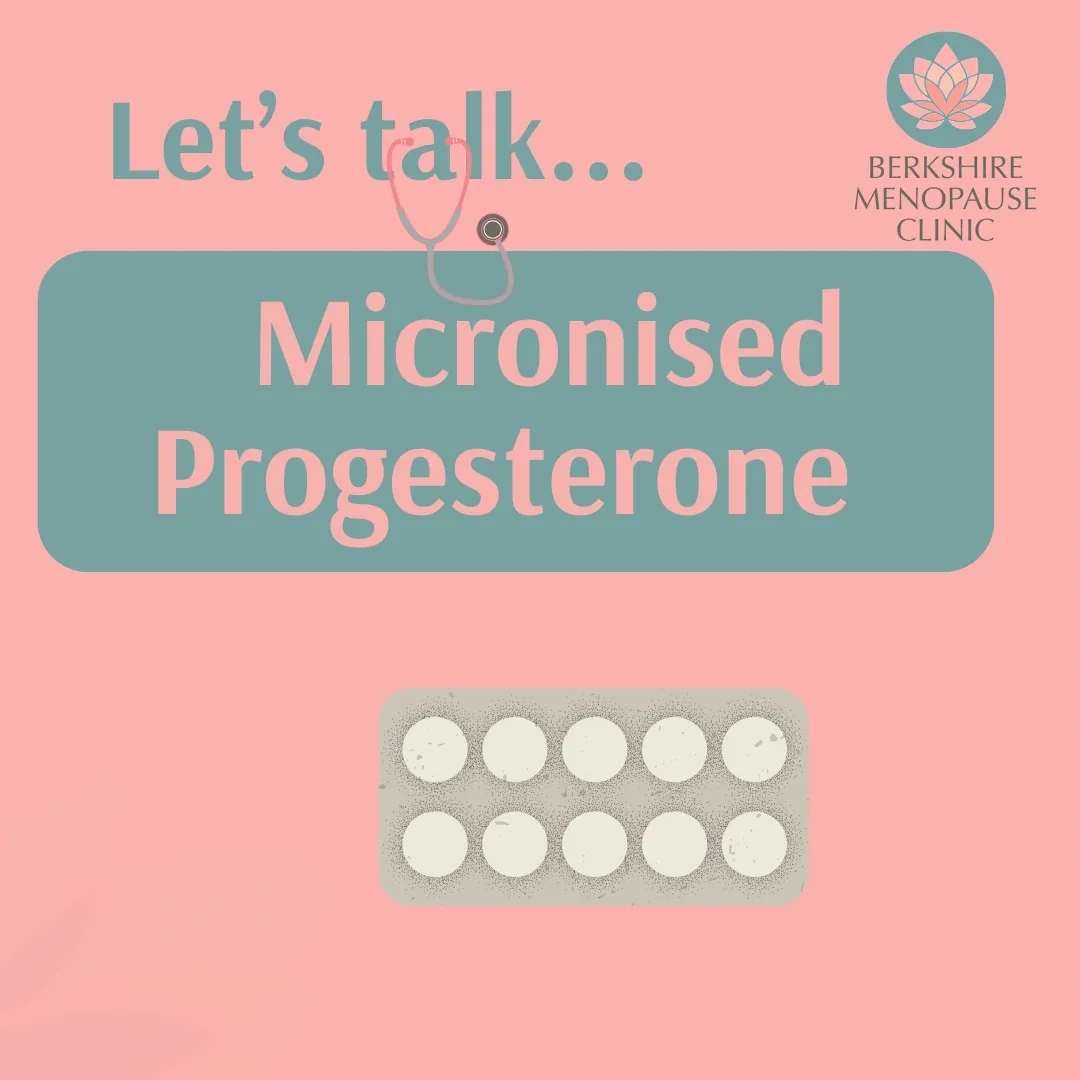
What is Micronised Progesterone?
It mimics the natural progestogens that are produced by the ovaries. Some brands include Utrogestan and Geptretix. For this reason, it is also referred to as body identical. Micronised progesterone can be taken alongside oestrogen, as part of Hormone Replacement Therapy (HRT).
Why do I need to take a progestogen?
If you have a womb (uterus), you will need to take a progestogen (in the form of an oral or vaginal tablet, or a hormonal coil), in addition to oestrogen. This is because oestrogen helps manage your symptoms, whilst progestogens help protect your womb lining (endometrial protection). If you take oestrogen alone, this can cause the womb lining to thicken, and in turn increase risk of womb cancer. By taking a progestogen, this will keep the womb lining thin.
How do I take Micronised Progesterone?
Micronised progesterone causes drowsiness in some women. We therefore recommended you take it at bedtime.
It is also best to take Micronised progesterone on an empty stomach as eating food can increase its absorption.
There are 2 ways of taking Micronised progesterone, which depend on the date of your last period.
§ If you are not having periods (and your last period was more than one year ago), we would recommend you take continuous HRT. Micronised progesterone is licenced as 100mg for 25 days in a month, but it is easier and more commonly taken every day with no break.
§ If you are still having periods (or you last period was less than one year ago), we would recommend you take sequential HRT. Micronised progesterone is licenced as 200mg for 12 days in a month, but it is easier and more commonly taken for two weeks, followed by two weeks break, on a repeated basis. In the weeks you do not take the progestogen, you are likely to get a withdrawal bleed.
If your periods have not long stopped (within a year), we do not suggest you take the progestogen continuously throughout the month as it is likely you will get erratic or irregular bleeding.
What are the advantages?
Micronised progesterone is body identical, and there is evidence for lower risks over older, synthetic types of progestogens:
§ Studies have shown Micronised progesterone does not increase the risk of blood clots (compared to synthetic progestogens which carry a small increased risk).
§ Micronised progesterone does not appear to be associated with a risk of breast cancer when taking it for the first 5 years. After this time, the risk is still very low. Although the risk is slightly higher with other (synthetic) progestogens, the risk is still lower than those who drink 2 glasses of wine a day; are overweight; do not exercise; or smoke.
What are the side effects?
If you have a Soya allergy, you must not use Micronised progesterone. As there is a possible link between soya and peanut allergy, those with peanut allergies are also advised to not to take the medication.
One of the main side effects of Micronised progesterone is drowsiness. Many women report poor sleep around menopause, so may benefit from this effect by taking it at night. Some other common side effects include low mood, bloating, and breast tenderness. These tend to settle by 8-12 weeks. Bleeding is common with Micronised progesterone and should settle within 3-6 months. If you get heavy bleeding, or new bleeding beyond 6 months, this may need investigating and you should contact your GP or menopause specialist.
Some women experience symptoms suggestive of intolerance to progestogens. There are alternative ways of taking Micronised progesterone, which may help these side effects. For example, taking it vaginally. This method is off licence, and the same dose and tablet are prescribed (as for oral use). You can speak with your specialist for more information.
For more support with your menopause symptoms, book an appointment with our accredited menopause specialist