What are HRT Patches?
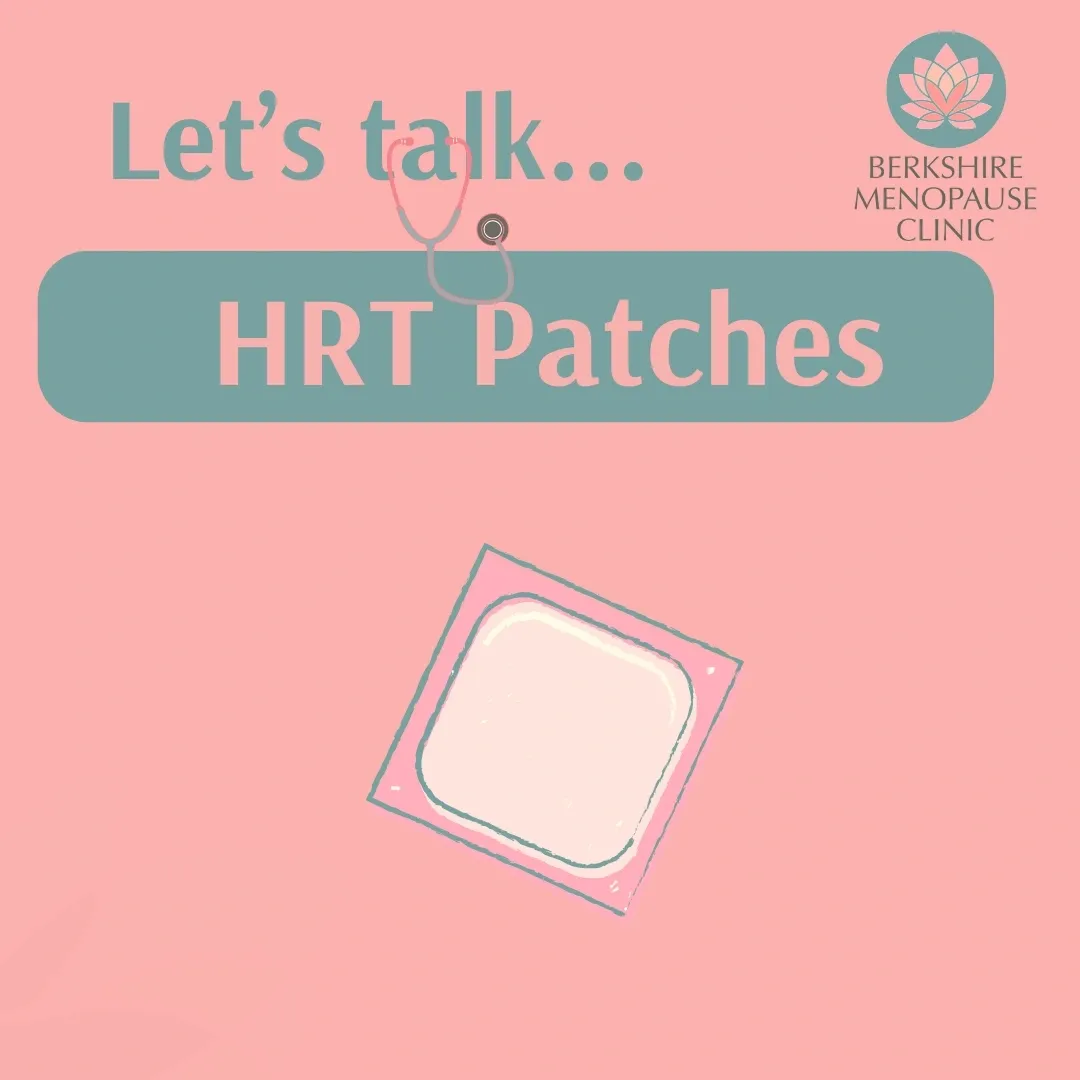
HRT patches are absorbed directly through the skin (transdermal), and slowly release hormones. There are 2 types of HRT patches. Ones containing only oestrogen, and ones containing both oestrogen and progestogens (combined patches).
Both types of patches contain the hormone,17 beta-Oestradiol, the main type of natural oestrogen in the body (making them body identical). Oestrogen in patches can be used as part of Hormone Replacement Therapy (HRT) to improve menopause symptoms. Additionally, they have many health benefits including reducing risk of heart disease, osteoporosis, diabetes, and cognitive decline.
What if I have a womb?
If you have a womb (uterus), and you are using oestrogen-only patches, you will need to take progestogens (usually in the form of an oral or vaginal tablet, or a Mirena® coil), in addition to oestrogen. This is because oestrogen helps manage symptoms, and progestogens helps protect your womb lining. If you take oestrogen alone, this can cause the womb lining to thicken, and can increase the risk of womb cancer. By taking a progestogen, this will keep the womb lining thin.
If you are using combined patches (which contain progestogens), you will not require any additional progestogens.
How do I know which patches to use?
The type of patches you use will depend on the date of your last period, and if you still have a womb:
§ Oestrogen only patches– You may be prescribed these if you no longer have a womb (or have chosen to use a different preparation of progestogens to protect your womb lining). All the patches in the pack will be identical throughout the month, containing the same dose of 17-beta oestradiol.
§ Combined continuous patches– You may be prescribed these if you still have a womb, and your last period is more than one year ago. All the patches in the pack will be identical throughout the month, containing 17-beta oestradiol and a type of progestogen (which differs according to the brand).
§ Combined sequential patches– You may be prescribed these if you still have a womb, and your last period is less than one year ago. These patches contain differing hormones, at various times of the month. For half of the month, the patches will contain 17 beta-Oestradiol, and for the other half of the month, they will contain both 17 beta-Oestradiol, and a type of progestogen (which differs according to the brand). As this is the only patch in which the hormones you are taking change throughout the month, the instructions on how to take these will be slightly different.
How do I use my HRT patches?
These patches are supplied in many different doses (depending on the preparation). Most women start with the lowest doses, but it is common for younger women to need higher doses.
Application should be on intact, clean, dry, hairless skin below the waist, avoiding breasts and irritated areas.
The patches should be changed twice a week, rotating the skin site: On Day 1 (e.g. Monday), then Day 5 (e.g. Friday), and then Day 1 again (Monday). This should be on a repeated basis, with no break, and not removed for any activities or sleep.
If you are taking a combined sequential patch regime, you will apply one type of patch (oestrogen only) for half the month (still changing these twice a week), and another type (oestrogen plus progestogen) for the other half of the month (again changing these twice a week).
The patches usually stick on well and you can continue normal activities such as showering, swimming, and exercising.
If you get a sticky plaster mark after removing a patch, baby oil or eye makeup remover on a dry cloth can be effective at removing these marks.
What if my patch falls off?
You should apply a new patch once you realise. However, continue to change to the next patch on the day you planned to originally change it. This might mean you only use the new patch for a short time before changing it again.
You may get some bleeding or spotting during this time.
What if I forget to change my patch?
You should change to a new patch as soon as you remember. However, continue to change to another patch, on the day you planned to originally change it. This might mean you only use the new patch for a short time before changing it again. You may get some bleeding or spotting during this time.
What are the advantages of oestrogen patches?
The benefits of oestrogen patches come from being transdermal (absorbed through the skin) and being body-identical, which make them favourable to oral synthetic oestrogen tablets:
§ There is no increased risk of blood clots or stroke with transdermal preparations. This contrasts with oral oestrogens, which pass through the liver and activate the clotting factors, resulting in a small increased risk of blood clots and strokes. Transdermal oestrogen is a safe preparation used in women with migraines. As there is a small risk of stroke associated with migraines, oral HRT is not recommended in these women.
§ You may find that you need to increase/decrease your dose of oestrogen according to your needs- This is easy to do with transdermal patches, gels, or sprays.
§ Transdermal oestrogen does not affect your libido. Oral oestrogen can increase levels of sex hormone binding globulin which in turn reduces the amount of free testosterone in your blood stream. This can worsen symptoms of low testosterone such as low sexual desire (libido) and energy.
What should I know about combined patches?
Combined patches have a slightly different risk profile to oestrogen-only patches. They contain the same body identical oestrogen present in oestrogen-only patches (hence similar benefits as above). However, the progestogens are synthetic. This slightly increases the risk of blood clots and breast cancer compared to a body-identical progestogens. Although the risk of breast cancer is slightly higher, it is still lower than those who drink 2 glasses of wine a day; are overweight; do not exercise; or smoke.
What are the side effects of using patches?
Some women can get local irritation or a skin reaction at the application site.
Common side effects of oestrogen in patches include breast tenderness, nausea, and bloating. Most side effects settle and improve within 3 months. Some women find star flower oil can improve breast tenderness. We suggest starting with 1000mg daily for 3 months (available from over-the-counter pharmacies).
Common side effects of progestogens (if using combined patches) include low mood, bloating, and breast tenderness. These tend to settle by 8-12 weeks. Bleeding is common and should settle within 3-6 months. If you get heavy bleeding, or new bleeding beyond 6 months, this may need investigating and you should contact your GP or menopause specialist. Different brands have different ingredients, and if your side effects are not resolving may be worth trying a different brand OR completely changing the way you take your HRT.
For more information or support with your menopause symptoms, book an appointment with our British Menopause Society Accredited Specialist.