Exercise and Lifestyle Tips for Menopause
Lifestyle (encompassing nutritional, exercise and social habits) plays a huge influence around the menopause. Making positive changes can help reduce symptoms, improve mental well-being, maintain healthy bone density, and reduce the risk of long-term conditions such as heart disease, stroke, diabetes and cancers.
Additionally, many women notice weight gain and particularly a shift from being ‘pear shaped’ to ‘apple shaped’, with more fat distribution around the centre. In such cases, specific adjustments to exercise and eating habits are needed to reduce weight gain.
Why do you gain weight around menopause?
During perimenopause and menopause, hormones such as oestrogen start to decline. This leads to a reduction in muscle mass. Muscle helps us burn calories. Therefore, if we have less muscle, we do not burn calories as efficiently. If we continue eating what we did when we had more muscle, then overtime this can lead to weight gain.
Some women experience menopause symptoms that can be debilitating, stopping you doing physical activities and exercise that would otherwise help prevent weight gain and preserve muscle mass. Additionally, symptoms such as poor sleep, lethargy can all lead to sugar cravings and carbohydrate loading, resulting in more calories consumption.
Keeping a food and symptom diary
You may find it useful recording your food and drink intake. This can help you to keep track of your eating habits and if you may be able to make positive changes for improvement. By tracking your symptoms on the same diary, may also help you identify potential food and drink symptoms triggers and by eliminating these may resolve certain symptoms.
NUTRITION
Here are some of the benefits of healthy eating:
· Reducing burden on the liver and other organs, which are in turn responsible for preventing insulin resistance, diabetes, metabolic syndrome, and heart disease.
· Reducing bloating and constipation
· Reducing vasomotor symptoms such as hot flushes and night sweats. Foods and drink high in sugar and carbohydrates take more energy to process, which in turn results in heat production and worsening flushes
· Giving you more energy- Foods and drink high in sugar and carbohydrates take more energy to process. This directs energy away from other areas of the body, resulting in lethargy.
· Maintaining muscle mass instead of fat deposition, in turn helping to maintain a healthy weight and protect bone health.
· Better mood-Reducing stress and inflammation on your gut can help with overall mood symptoms due to major link between the gut and brain.
· Improving sleep- foods high in caffeine, sugar, alcohol can all disrupt sleep directly as well as worsen symptoms such as bladder frequency and night sweats.
· Keeping a healthy bladder and vaginal environment. Like the gut, vaginal microbiome can be influenced by food and drinks. PH changes can increase the risk of infections such as bladder and thrush infections.
You may wish to try some of the following specific food practices to improve your gut health:
· Foods rich in protein– Such as legumes (beans, lentils, peas), lean meat, nuts help with gut motility and aid elimination of toxins. They also keep you feeling fuller for longer.
· ‘Rainbow vegetables’-Vegetables come in a variety of colours, all of which have different nutrients, providing different health benefits.
· Increased fibre uptake– Drinking plenty of water and eating foods rich in fibre (such as whole grains and bran, dried fruits, fruits such as apples, popcorn), can help aid gut motility, reduce constipation and remove toxins from the body.
• Eating more Omega 3 fatty acid rich foods– These are found in oil fish (such as sardines, salmon, mackerel), nuts, seeds and avocado. They have anti-inflammatory properties. They also help to lower cholesterol and prevent heart disease.
• Eating fermented foods- such as kimchi, sauerkraut, live yoghurt, kefir. These contain live bacteria. Our gut needs ‘good bacteria’ (Bifidobacterium, Lactobacillus) also known as probiotics to help keep the gut healthy and help improve digestion, bloating, gut motility, and removal of toxins, which in turn helps reduces lethargy, low mood, and poor sleep.
We also need foods to help keep the good bacteria alive (prebiotics)- such include onions, broccoli, kale and beans.
· Eating carbohydrate, sugar, fried food, saturated fats, red meats in moderation- Excess amounts of these foods can cause a sluggish bowel (reducing toxin removal from the gut), burden the liver, excess energy consumption, increase cholesterol and increase insulin resistance. This leads to effects such as constipation, bloating, lethargy, low mood, poor sleep, flushes and sweats, diabetes, and heart disease.
· Limiting caffeine and alcohol to the recommended 14 units per week- This may help to reduce hot flushes, night sweats, insomnia and increased bladder irritation and frequency. Alcohol is also a depressant, potentiating low mood, and excess alcohol is a risk factor for osteoporosis.
Foods containing Phyto-oestrogens
Phyto-oestrogens are plant compounds similar in structure to oestrogen and some women find them to be a good non-medication alternative to help with symptom control.
They are found in soya-based drinks and foods such as soya beans, green beans, tofu are termed isoflavones. Whilst those found in fruits, whole grains, cereals and seeds such as flax and linseeds are termed lignans.
Due to their similar composition to oestrogen, there are conflicting studies about their safety in those who are at risk of developing hormone dependent cancers such as breast cancer.
Some studies in fact have shown there to be a protective link between consumption of phyto-oestrogens to tumour cell growth or recurrence of cancer. This is most commonly seen in people who have been consuming phytoestrogens through their daily diet since this allows for more exposure to a balanced diet including phytoestrogens and the potential benefits, they produce with respect to breast cancer
However, there are also several studies indicating they may not always be protective depending on several factors such as age, cancer subtype, concentration, dose and type of phyto-oestrogen. Highly processed and concentrated phytoestrogens such as those containing high levels of soy and genistein may be less protective (or in fact a risk for breast cancer development) than those less-processed options such as tofu, edamame and tempeh.
Vitamins and supplements
As the name implies, these are products that aim to ‘supplement’ the diet with nutrients that may be missing. Examples include vitamins, minerals, amino acids, and enzymes. They are available in a variety of forms including capsules, tablets, powders, liquids, sprays, gummies. Herbal supplements are those made from plants, algae, fungi and example products include teas, extracts, tablets, or capsules.
You may find it helpful to look at our specific Resources leaflet ‘ How to safely choose supplements’, where we have outlines our recommendations for safely sourcing supplement and Vitamin information:
Calcium and Vitamin D: Having a diet sufficient in calcium (1300mg) and vitamin D (1000units) is important in helping reduce the risk of osteoporosis.(Some people prefer to get calcium from their diet. You can use this calculator to work out your daily food requirements- https://webapps.igc.ed.ac.uk/world/research/rheumatological/calcium-calculator/ )
The BDA has a list of calcium food sources and the amounts needed to get your recommended daily dose:
https://www.bda.uk.com/resource/calcium.html
Other supplements:
Some women report Magnesium Citrate, thionate or glycinate 300mg supplements beneficial for symptoms such as hot flushes, sleep, muscle cramps, restless legs, migraines and mood.
Omega 3 has benefits for reducing joint pains and inflammation
B12 has benefits on mood and energy
Ginseng has been shown to have anxiolytic properties.
Sage may help with symptoms such as hot flushes but should be avoided in risk of hormone dependent cancers.
Some women find star flower oil can improve breast tenderness. We suggest starting with 1000mg daily for 3 months (available from over-the-counter pharmacies).
Probiotics- There are many brands that supply probiotic supplements. It is important to get the right types and amount of bacteria (Bifidobacterium, Lactobacillus). My advice is always check the ingredients as many drinks or capsules may contain sugar and other additives that may counteract the nutritional benefits of any probiotic ingredients. Optibac is one brand I recommend.
Is fasting beneficial?
Intermittent fasting has shown to be good for sugars balance (allowing the gut to rest between meals), memory and concentration. However, it can be stressful on the body, triggering our stress hormone cortisol, which in turn can cause disruption to our hormone balance. It is therefore important to get a careful balance. There is good evidence that fasting 12 hours over night can achieve the careful balance of the benefits from fasting without putting the body under too much stress. For example, having the last meal at 7pm and awaiting until 7am to resume eating.
Similarly, aiming for gaps 4 hours between meals allows the gut to repair and also allows energy to be used in other ways (as eating uses a lot of energy and can contribute to lethargy symptoms).
EXERCISE
Exercise around the menopause can be beneficial for relieving symptoms such as flushes, sleep, anxiety, low mood, bladder symptoms, as well as improve risk of long-term conditions such as heart disease, diabetes, osteoporosis, dementia, and pelvic floor dysfunction (which can all be caused or worsened by menopause itself).
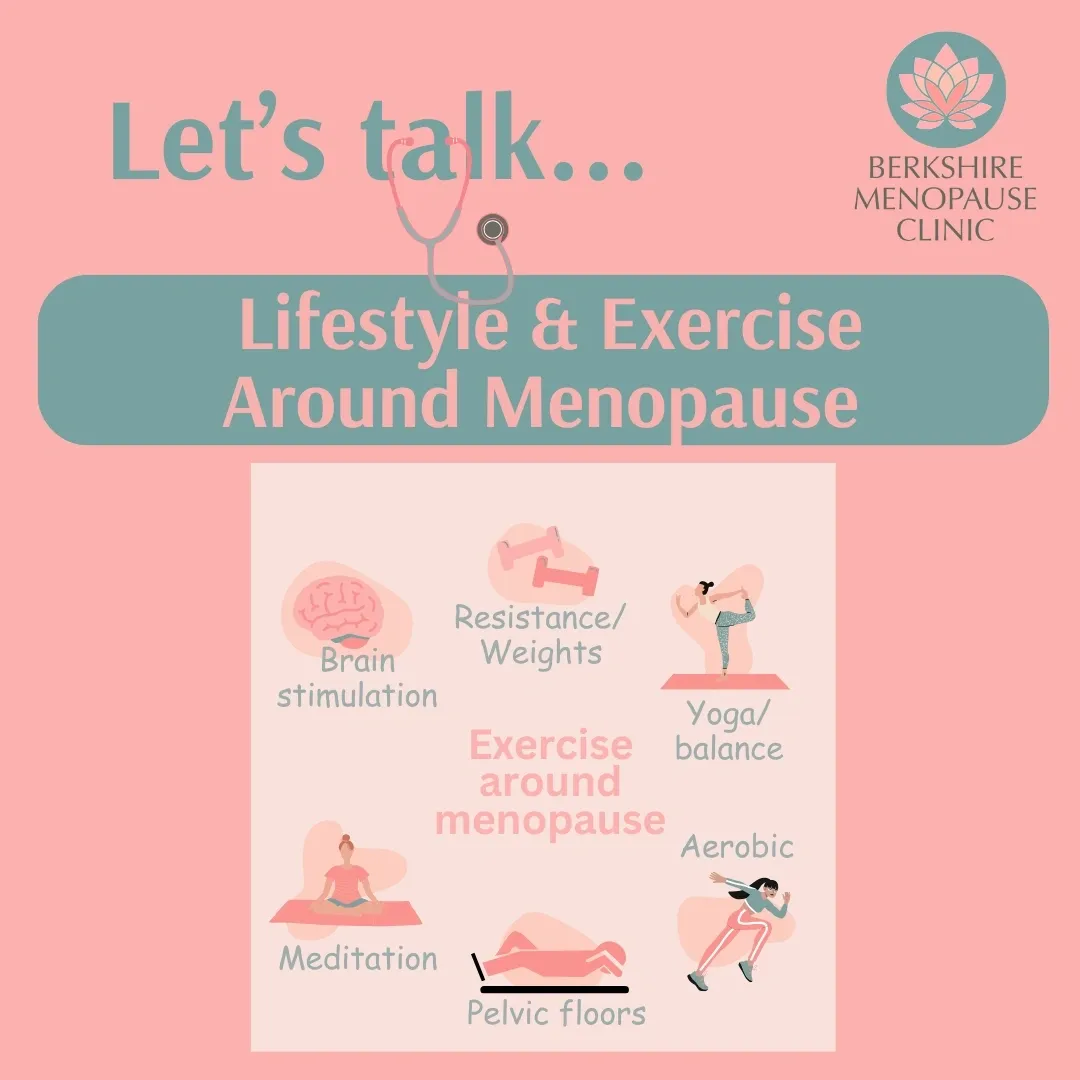
What exercises should you be focusing on and why?
🩺 Resistance/ weight training can help prevent osteoporosis and increase muscle mass. By building and strengthening the muscles and structures surrounding the bones means there is less physical force on bones, which can otherwise increase the risk of them breaking. Increasing muscle mass can also help with weight loss as muscle helps burn calories. Strength training can also help with metabolic health, in turn reducing the risk of diabetes and heart disease.
🩺 Yoga/ balance– as oestrogen levels decline with menopause, this in turn causes muscle mass loss. This can impact ability to balance and increase risk of falling over and breaking bones. Balance exercises such as yoga and Pilates help reduce this risk. Additionally, the exercises often involve connecting the mind and body, which can help reduce stress levels and improve mental health.
🩺 Meditation and breathing exercises. By slowing down thought processes and body movements, there is more control over the sympathetic nervous system. It is the sympathetic system which is responsible for production of the chemical adrenaline. Adrenaline is known as the ‘fight or flight’ chemical and evokes symptoms such as sweating, racing heart, anxiety, Meditation can calm these thus improving stress and mood, hot flushes, tingling, palpitations, and sleep, all of which can be worsened around the menopause.
🩺 Aerobic exercises improve how efficiently the heart pumps blood around the body, as well and improving blood vessel and lung function. This in turn helps prevent heart disease and associated conditions such as diabetes. In addition, doing aerobic exercise can increase energy levels, boost mood, reduce hot flushes and improve sleep quality.
🩺 Brain stimulation– we know that menopause and low oestrogen levels have been linked to worsening cognition and poor concentration. Keeping the brain stimulated through ‘mental gymnastics’ can improve these. Examples include word puzzles, mathematics problems as well as activities that require mental effort such as painting, drawing and other crafts. These activities are also known to help with mood and stress.
🩺 Pelvic floor exercises. Lack of oestrogen leads to reduction in collagen and elasticity in the urogenital region. This in turn leads to conditions such as prolapse of pelvic organs and incontinence. Doing pelvic floors can help tighten the muscles and reduce laxity and pelvic floor issues.
GENERAL LIFESYTLE PRACTICES
Some healthy lifestyle practices can help menopausal symptoms, improve mental well-being, and provide long-term physical health benefits. Not smoking or drinking excessively (keeping to the recommended 14 units or less) can reduce vasomotor symptoms (such as hot flushes and night sweats), bladder irritation and urinary frequency and reduce the risk of osteoporosis, cardiovascular disease, and breast cancer. Reducing caffeine consumption can help with vasomotor symptoms, bladder, sleep and mood issues. A balanced Mediterranean style diet, avoiding spicy foods, and regular exercise (which includes 30 minutes of moderate aerobic exercise five times a week, weight-bearing exercises and balance exercise such as yoga or Pilates) can help reduce vasomotor symptoms, risk of breast cancer, cardiovascular disease, osteoporosis, and improve muscle and joint strength as well as mental health. Prioritising sleep and relaxation techniques can improve mood, anxiety, and stress. There is some evidence from acupuncture, yoga and Pilates in improving mood, sleep, joint pain and hot flushes.
Sunlight and early morning exercise can help with motivation and energy during the day and improve sleep at night. Conversely, doing exercise late at night may excite or stimulate the body, leading to difficulty getting to sleep.
For more support managing your menopause, book an appointment with our specialist who can guide you with a holistic, caring approach: